How Wellness Court Supports Recovery in Kansas City, Missouri
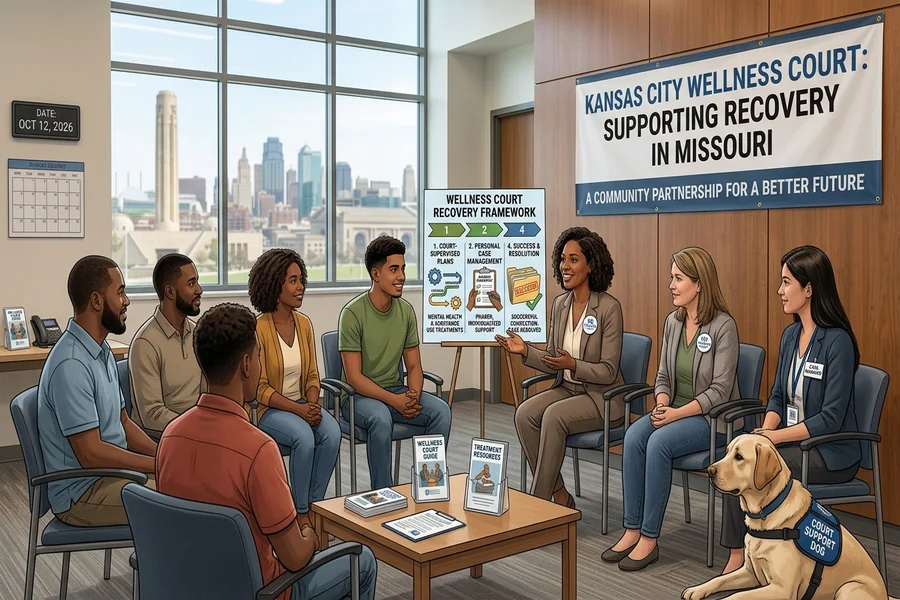
A court case might reveal problems that predate an arrest. Could include substance use, mental health needs, trouble with housing, job loss. The Kansas City Wellness Court takes a distinct approach to these matters. Court oversight is combined with treatment and support. Its purpose is to help eligible folks stabilize their lives while working through their court process. Wellness Court opened in Kansas City in January of 2025. The program combined the former Drug Court and Mental Health Court into one. Provides services to individuals who are being prosecuted in Kansas City Municipal Court and who demonstrate the presence of co-occurring mental health and substance use issues. Participation is voluntary. That shift is important. Recovery rarely comes in nice, neat packages.
What Is a Wellness Court?
Wellness Court is a comprehensive court-supervised treatment program. It’s about the full individual, not just the allegation. Assistance may be available for:
- Treatment for substance use
- Mental health treatment services
- Shelter”
- Job Opportunities
- schooling
- Support for Recovery
- Social work
The court said the purpose is to support mental, emotional and physical well-being. It also tries to cut down on recidivism and promote public safety. That doesn’t make the legal case go away. Participants have rules to follow and court duties to accomplish. It’s the attention that makes the difference. Treatment is included in the court plan.
Why Does Recovery Require Court Support?
Recovery is not a matter of good intentions. Someone can desire to stay sober yet not have steady housing. Someone else might need therapy but lack reliable transportation to appointments. Others may need a job before they can afford to meet basic demands. These hurdles can build up fast. Wellness Court meets those real-world demands while individuals are in treatment. The program helps individuals move toward more stable lifestyles, including through job, education and housing support, Kansas City said. Stability makes it simpler to recover. Someone with a safe place to sleep can concentrate better. A consistent job might give you structure and income. Little ones can support large transformations.
How Does the Program Work?
Wellness Court features four phases. These include orientation, stabilization, community reintegration and maintenance. Each phase has a purpose of its own. Early work may be about learning the rules of the program and commencing treatment. Later stages can focus more on community life and long-term stability. Participants can also select elective programs and activities according to their interests. That individual choices can matter. Recovery is not a race where everyone reaches each mile marker at the same speed. Different backgrounds, needs and strengths come with people. The court issues an order. But the effort must still be done by participants.
What Does Treatment Entail?
Treatment is based on the needs of the person. Some participants may need therapy for substance use. Some may need mental health services.” Some require both. Substance use and/or mental health therapy for graduation at Kansas City is required for students. Participants also must meet treatment goals and other criteria in their Wellness Court contract. The court may also order relapse prevention or aftercare planning. That’s important because treatment shouldn’t finish when the judicial supervision does. A good recovery strategy looks to the next court date. But it raises a tougher question: What happens when the case is finished?
Recovery Work, Housing Part Of
Housing could seem totally irrelevant to court. It isn’t. Without secure housing, a person could struggle to make appointments, to store medication, to sleep well, or to avoid dangerous environments. Employment can be important. Work can give you cash, routine, self-confidence, and a feeling of purpose. Stable housing is one of the graduation requirements for Kansas City’s Wellness Court. Participants also have to be working, in school, volunteering, or in day treatment. KC additionally considers housing, job, transportation, and medical care as core support needs for Specialty Court participants outside of bench services. On paper these needs may seem minimal. They can be huge for someone attempting to reconstruct their life.”
What If Someone Is Struggling?
Recovery is not a straight line. Sometimes someone will miss an appointment, have a setback, or have trouble reaching a treatment objective. That doesn’t mean all the efforts have failed. Wellness judicial uses continuous judicial oversight and treatment planning. Participants must follow their court contract and their relapse prevention or aftercare plan. True if something goes wrong. An issue hidden is a problem harder to solve. Early conversations with the court team can assist in identifying what support is needed. The exact answer will rely on the facts and the rules of the program.
What do you need to graduate?
Graduation brings with it certain expectations. Kansas City has a list of requirements for Wellness Court graduation. Must finish therapy, comply with treatment goals, comply with court contracts and complete relapse prevention or aftercare plans. They must also:
- Stay drug and alcohol clean for at least 180 days
- No fresh arrests, no new charges
- Complete community service or pay fines required
- Have solid housing
- Be part of community support
- Work, School, Volunteer or Day Treatment
These objectives indicate that graduating is beyond making appointments. The program looks for evidence of stability that can carry through after court oversight ends.
Women’s court?
Wellness Court also has WIN, Women In Need of Change. WIN is a trauma-informed specialty court track for women who qualify. It emphasizes rehabilitation, independence and self-sufficiency. The program may involve therapy, counseling, education, job training and other support. The track includes stages and eligibility restrictions. This approach acknowledges that trauma can affect a person’s entry into the legal system. Support must be for the person, not the charge.
Where does Beyond the Bench KC fit in?
No court program can tackle all the practical problems by itself. Participants may require support with rent, utilities, work clothes, transportation, medical care or other essential needs. Beyond the Bench KC is looking to bridge some of these gaps in resources for Specialty Court participants. Kansas City Specialty Courts at Beyond the Bench KC supports awareness and community support of their rehabilitation aim. Its driving belief is simple: Long-lasting justice has to address the core causes of destructive behavior and promote good change. That is consistent with the recovery goal of Wellness Court .
An Easier Road Ahead
Wellness Court provides qualifying defendants in Kansas City an organized pathway to recovery. It includes treatment, court supervision and practical support. There is still some work to be done. Participants will be expected to attend treatment, follow court rules, work on stability and be held accountable. But they don’t have to do it all by themselves. That support can be important for those who have both judicial involvement and therapeutic needs. Recovery takes time, patience and consistent work. Sometimes a second opportunity begins with the proper people around you.
Wellness Court in Kansas City FAQs
- Who is eligible for Kansas City Wellness Court?
Wellness Court is for those charged in the Kansas City Municipal Court who demonstrate evidence of co-occurring substance use and mental health concerns. Participation is voluntary and candidates must pass the program screening process.
- What kinds of services does Wellness Court offer?
The program connects participants to substance use and mental health therapy. It also promotes housing, employment, education and community support objectives. Services are tailored to meet the needs and treatment plan of each patient.
- What is the length of the Wellness Court?
The program consists of four phases: orientation, stability, community reintegration and maintenance. Progress and program requirements may influence completion time. The participant graduates after fulfilling specified treatment, sobriety, housing, judicial and community goals.
- What if a Wellness Court participant gets a setback?
Participants are not to hide their difficulties, but to bring them to the attention of their court and therapy teams. The program incorporates relapse prevention and aftercare planning. The response to a setback relies on the individual’s circumstances and the guidelines of the program.
- How can Beyond the Bench KC help Wellness Court stakeholders?
Beyond the Bench KC helps fill resource gaps that may impede success in Specialty Courts. Help may include shelter, work, transport, medical care and other essential requirements. Its mission supports the rehabilitative aim of the Kansas City Specialty Courts.