E-commerce Marketing Strategy for Sustainable Online Growth
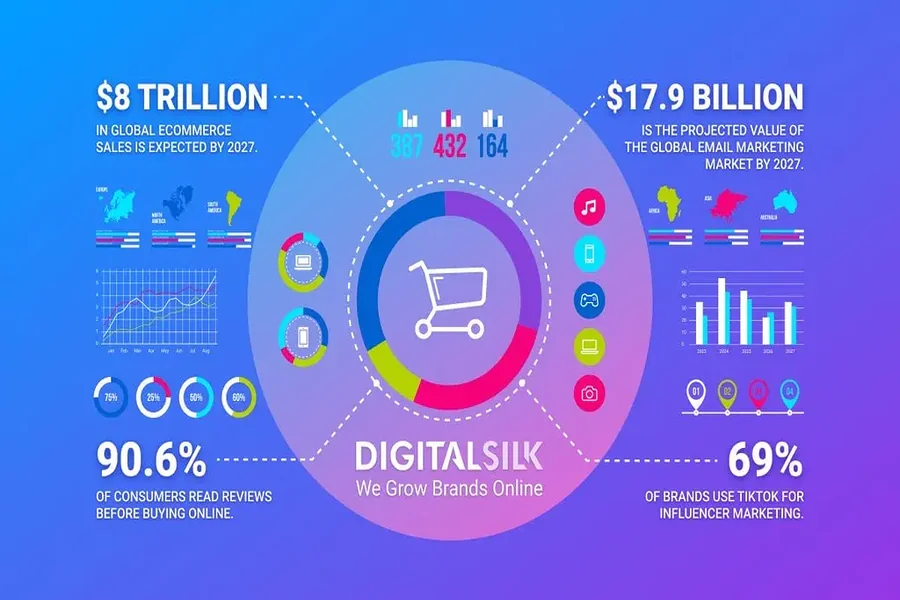
Running an online store is about much more than listing products and waiting for customers to arrive. Competition is intense, shoppers have many choices, and people expect convenient experiences from the first search to the final purchase. This is why an effective E-commerce Marketing Strategy is essential for businesses that want to attract the right audience, increase sales, and build lasting customer relationships.
A strong strategy combines several digital marketing methods rather than depending on one promotional channel. Search engine optimization, social media, email campaigns, paid advertising, content marketing, customer reviews, and conversion optimization can all work together to create a consistent buying journey. The goal is not simply to generate traffic but to turn relevant visitors into satisfied and returning customers.
Why E-commerce Marketing Matters for Online Businesses
The growth of online shopping has created opportunities for businesses of all sizes. A small store can reach customers beyond its local area, while an established retailer can use digital channels to strengthen its relationship with existing buyers. However, having an attractive website is not enough. Customers need a reason to notice your brand, trust it, and choose it over competitors.
Marketing helps create that connection. Search optimization can bring shoppers who are already looking for specific products. Social media can introduce products to people who may not know the brand yet. Email marketing can encourage previous customers to return, while paid campaigns can provide faster visibility for selected products.
An effective approach also considers the complete customer journey. A shopper may first see a product on social media, search for reviews, visit the website several times, compare prices, and finally purchase after receiving an email reminder. Each interaction can influence the final decision.
For this reason, businesses should avoid treating marketing channels as separate activities. The strongest results often come when different channels support the same business goals, messaging, and customer experience.
Key Elements of an Effective E-commerce Marketing Strategy
The first step is understanding the target audience. Businesses should know who their ideal customers are, what problems they are trying to solve, what influences their purchasing decisions, and where they spend time online. Audience research helps businesses create product descriptions, advertisements, content, and offers that feel relevant rather than generic.
Search engine optimization is another important part of online store growth. Product pages should use clear titles, useful descriptions, descriptive URLs, relevant keywords, and helpful information. Category pages can target broader searches, while product pages can address specific buying intentions. Technical performance also matters because slow pages and difficult navigation can frustrate potential customers.
Content marketing can support both SEO and customer education. Instead of publishing content only to promote products, an online store can answer common questions, compare product options, explain how products work, and provide practical buying advice. Useful content can establish credibility while helping potential customers move closer to a purchase.
Social media marketing provides another way to build visibility and engagement. Product demonstrations, customer stories, behind-the-scenes content, short videos, tutorials, and user-generated content can make a brand feel more authentic. The right platform depends on the audience and the type of products being sold.
Paid advertising can complement organic marketing efforts. Search ads can capture high-intent shoppers, while social advertising can help introduce products to specific audience segments. However, advertising should be measured carefully. Spending more money does not automatically mean better results.
Email marketing is particularly valuable because it allows businesses to communicate directly with people who have already shown interest. Welcome emails, abandoned-cart reminders, product recommendations, seasonal promotions, and post-purchase messages can help increase repeat purchases.
Businesses can also strengthen their digital presence through strategic off-page promotion. For example, earning relevant mentions and links from quality websites can support brand visibility and authority. When discussing broader online visibility, resources such as a Backlink can also be considered as part of a wider link-building and promotional approach.
How to Increase Traffic, Conversions, and Customer Loyalty
Getting visitors to an online store is only one part of the challenge. Those visitors also need a clear path toward making a purchase. This is where conversion rate optimization becomes important.
Product pages should make essential information easy to find. Customers typically want to know what the product does, how much it costs, what sizes or variations are available, how delivery works, and whether other customers have had positive experiences. High-quality images and videos can provide additional confidence, especially when shoppers cannot physically examine the product.
Trust signals are equally important. Reviews, ratings, clear return policies, secure payment options, contact information, and transparent shipping details can reduce uncertainty. Customers are more likely to buy when they feel that a business is legitimate and that potential problems will be handled fairly.
The checkout process should also be simple. Too many form fields, unexpected costs, forced account creation, or confusing navigation can lead to abandoned carts. Businesses should regularly test their checkout experience and remove unnecessary friction.
Personalization can further improve the shopping experience. Product recommendations based on browsing or purchasing behavior can help customers find relevant items more quickly. Personalized email campaigns can also make promotional messages more useful.
Customer retention deserves as much attention as customer acquisition. Existing customers have already demonstrated an interest in the brand, so businesses can encourage them to return through loyalty programs, personalized offers, useful follow-up content, and excellent customer service.
A customer who has a positive experience may also leave a review, recommend the business to others, or share products on social media. In this way, customer satisfaction can become a valuable marketing asset.
Measuring and Improving Your Marketing Performance
An E-commerce Marketing Strategy should be based on measurable objectives. Without tracking performance, it becomes difficult to know which activities are generating meaningful results.
Businesses can monitor metrics such as website traffic, conversion rate, average order value, customer acquisition cost, return on advertising spend, cart abandonment rate, email engagement, and repeat purchase rate. These numbers can reveal where customers are entering the sales funnel and where they are leaving.
For example, high traffic with low conversions may indicate that the store is attracting the wrong audience or that product pages need improvement. A high cart abandonment rate may point toward problems with shipping costs, checkout complexity, or payment options. Strong first-time sales but weak repeat purchases may suggest that customer retention needs more attention.
Testing is another important part of improvement. Businesses can experiment with product page layouts, calls to action, promotional offers, images, headlines, email subject lines, and advertising audiences. Small improvements can create significant results when applied across a large customer base.
It is also useful to review marketing performance regularly instead of making decisions based on short-term fluctuations. Some channels may generate immediate sales, while others contribute to brand awareness and future purchases. Looking at the broader customer journey can provide a more accurate picture of performance.
A successful strategy should therefore remain flexible. Consumer behavior, search trends, advertising platforms, competitors, and market conditions can change. Businesses that monitor results and adapt their approach are better positioned to maintain sustainable growth.
Final Thought
An effective E-commerce Marketing Strategy brings together visibility, trust, customer experience, and measurable growth. The most successful online stores do not rely on a single tactic. They create a connected marketing system in which SEO attracts relevant visitors, content provides value, social media builds engagement, advertising reaches targeted audiences, and email marketing supports retention.
The key is to focus on the customer rather than simply promoting products. Understand what shoppers need, make information easy to access, remove unnecessary barriers, and provide a consistent experience across every channel. At the same time, use performance data to identify what works and improve what does not.
Online commerce will continue to evolve, but the basic principle remains the same: businesses that consistently provide value and make purchasing easier have a stronger opportunity to earn attention, conversions, loyalty, and long-term success.
FAQs
What is an E-commerce Marketing Strategy?
An E-commerce Marketing Strategy is a planned approach to attracting shoppers, promoting products, increasing online sales, and retaining customers through digital marketing channels.
Why is SEO important for an online store?
SEO helps online stores appear in relevant search results, allowing potential customers to find products and information without relying entirely on paid advertising.
How can an online store increase conversions?
An online store can increase conversions by improving product pages, using clear calls to action, providing trustworthy reviews, simplifying checkout, and offering transparent pricing and shipping information.
Is social media marketing useful for e-commerce?
Yes, social media can help online stores increase brand awareness, demonstrate products, engage customers, generate website traffic, and encourage purchases.
How does email marketing help e-commerce businesses?
Email marketing helps businesses communicate directly with interested and existing customers through welcome campaigns, product recommendations, promotional offers, abandoned-cart reminders, and follow-up messages.
What should an e-commerce business measure?
Important metrics include conversion rate, website traffic, average order value, customer acquisition cost, cart abandonment rate, advertising return, email engagement, and repeat purchase rate.
How often should an online marketing strategy be reviewed?
Businesses should monitor performance regularly and conduct deeper reviews periodically so they can identify changes in customer behavior, channel performance, competition, and overall business goals.